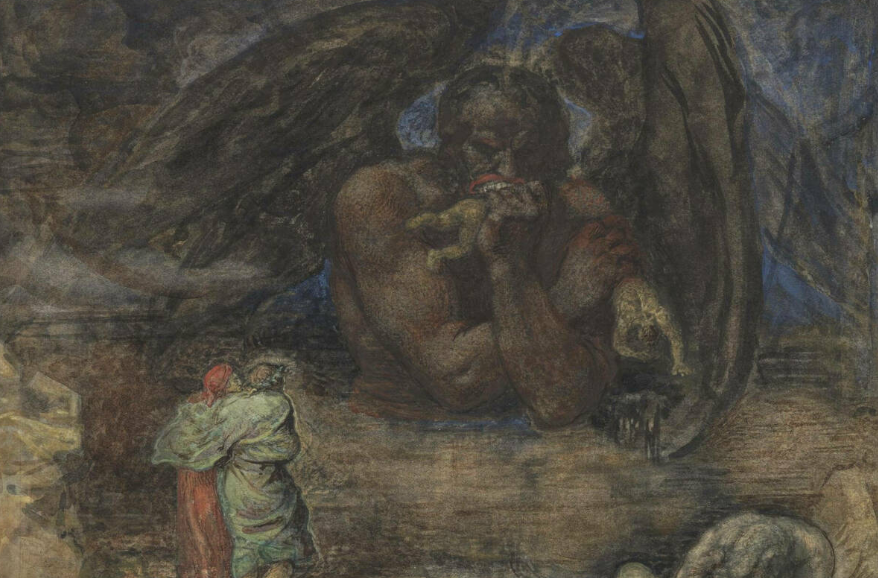
Featured Image: John Stock, Dante's Inferno, Dante and Virgil encounter Lucifer, 1923; Source: Wikimedia Commons, PD-Old-70.
When I was working on my doctoral dissertation, I came into contact with 3 individuals who shaped my thoughts about technology and its impact on what it means to be human. The first was Jacques Ellul, a very radical non-Catholic Christian. The Technological Society remains a seminal book in technology studies, and these words continue to haunt me: .
“When technique enters into every area of life, including the human, it ceases to be external to man and becomes his very substance. It is no longer face to face with man but is integrated with him, and it progressively absorbs him.” (p. 6)
The next was Ursula Franklin, a holocaust survivor who immigrated to Canada and converted to Quakerism. I wrote a tribute to her work in the Canadian Journal of the Scholarship of Teaching and Learning last year, but what is not in that article is Franklin’s direct experience of God, her ability to see God in other people, and her commitment to peace and the environment.
And finally, there was Marshall McLuhan, whose work I started to read after I found The Medium and the Light in Old Goats books in Waterloo, ON. This tribute to McLuhan was originally entitled Lucifer the Electrical Engineer, but I prefer the title the editors at Church Life Journal gave it. This piece also signifies a change in the direction of my writing. These three great thinkers each had a deep and rich spirituality. They not only helped form my thoughts about technology, they have also encouraged me to pay greater attention to God.